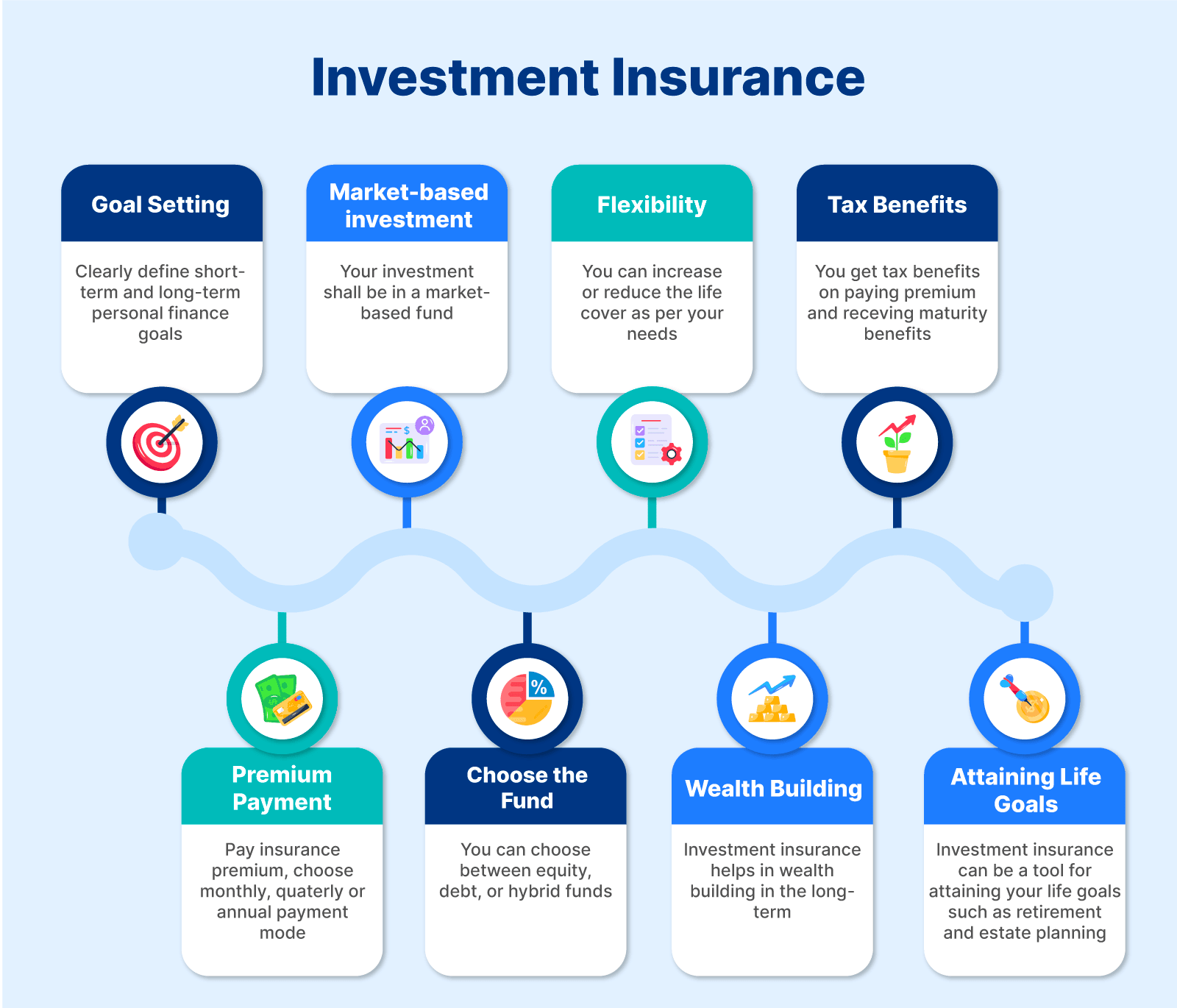
(A CEO-Level Analysis of Opportunity, Risk, and Strategic Fit)**
Introduction: Why Smart Executives Question the Investment Narrative
“Life insurance as an investment” is one of the most controversial ideas in personal and corporate finance. It is aggressively promoted, widely misunderstood, and often poorly evaluated—even at the executive level.
For some CEOs, life insurance is pitched as:
- A tax-efficient investment
- A low-risk wealth builder
- A guaranteed return vehicle
- A retirement solution
For others, it is dismissed entirely as:
- An expensive distraction
- A commission-driven product
- An inferior alternative to real investments
The truth, as always at the executive level, is context-dependent.
This article does not sell life insurance.
It dissects it—as an investment instrument—so CEOs, founders, and business owners can decide when it makes sense, when it does not, and why.
1. Reframing the Question: Is Life Insurance Really an Investment?
1.1 The CEO Perspective on “Investment”
Executives define an investment as something that:
- Deploys capital
- Carries measurable risk
- Offers expected returns
- Has opportunity cost
Life insurance must be judged by the same standard—not marketing language.
1.2 The Core Reality
Life insurance was not invented to generate returns.
It was created to transfer risk.
Any investment characteristics are:
- Secondary
- Conditional
- Structure-dependent
This distinction matters.
2. Types of Life Insurance Commonly Marketed as Investments
2.1 Whole Life Insurance
Whole life combines:
- Lifetime coverage
- Fixed premiums
- Guaranteed cash value growth
Often marketed as:
- “Stable, predictable, and safe”
Reality:
- Low internal rate of return (IRR)
- Long break-even periods
- High early costs
2.2 Universal Life Insurance
Universal life introduces:
- Flexible premiums
- Interest-linked cash value
Variants include:
- Indexed universal life (IUL)
- Variable universal life (VUL)
These products increase complexity, not certainty.
2.3 Variable Life Insurance
Variable life allows:
- Cash value invested in market-linked subaccounts
This exposes policyholders to:
- Market risk
- Fees layered on top of investment risk
CEOs should evaluate this like any actively managed fund—with insurance drag.
3. Understanding Cash Value: The “Investment” Component
3.1 What Cash Value Really Is
Cash value is:
- A reserve inside the policy
- Funded by premiums beyond pure insurance cost
- Controlled by the insurer’s rules
It is not a brokerage account.
3.2 Liquidity Is Conditional
Executives must understand:
- Withdrawals may reduce death benefit
- Loans accrue interest
- Policy lapse risk exists
Liquidity is structured, not free.
4. The True Cost Structure (Often Ignored)
4.1 Front-Loaded Expenses
Life insurance investments typically include:
- High initial commissions
- Administrative fees
- Mortality charges
Early-year returns are often negative.
4.2 The Break-Even Reality
Many policies:
- Break even after 7–15 years
- Underperform alternative investments for decades
This is critical for CEOs who value capital efficiency.
5. Comparing Life Insurance to Traditional Investments
| Criteria | Life Insurance | Equities | Bonds | Private Equity |
|---|---|---|---|---|
| Expected Return | Low–Moderate | High | Moderate | High |
| Liquidity | Restricted | High | Moderate | Low |
| Transparency | Low | High | High | Moderate |
| Tax Treatment | Favorable | Variable | Variable | Complex |
| Complexity | High | Low | Low | High |
Life insurance is not a replacement for investments.
It is, at best, a supplement.
6. When Life Insurance Can Function Strategically as an Investment
6.1 Tax Optimization for High Earners
In some jurisdictions:
- Cash value growth is tax-deferred
- Death benefits may be tax-free
For ultra-high-income CEOs, this can be strategically relevant—but only after optimizing traditional vehicles.
6.2 Estate Planning and Wealth Transfer
Life insurance can:
- Create liquidity at death
- Equalize inheritance
- Reduce forced asset sales
The “return” is not yield—it is certainty.
6.3 Corporate Balance Sheet Strategy
Companies may use life insurance to:
- Offset deferred compensation liabilities
- Fund executive benefits
- Improve long-term cash flow predictability
In this context, it is a financial engineering tool, not a growth investment.
7. The Psychological Appeal (And Why CEOs Must Resist It)
7.1 Guarantees Feel Safe
Executives are often attracted to:
- Guaranteed returns
- Stable projections
- Downside protection
But guarantees come at a cost—usually reduced upside.
7.2 Complexity Masks Underperformance
Sophisticated illustrations can:
- Obscure true returns
- Delay recognition of inefficiency
CEOs should demand:
- Internal rate of return (IRR)
- Scenario stress testing
- Clear opportunity-cost analysis

8. Common Executive Mistakes
- Treating insurance as a primary investment
- Ignoring opportunity cost
- Underestimating fee drag
- Overvaluing tax deferral
- Failing to review policy performance
Mistakes compound faster at high income levels.
9. A CEO Decision Framework
9.1 Ask These Questions Before Buying
- What role does this play in my total portfolio?
- What is the expected IRR after all costs?
- What am I giving up to fund this?
- Is the benefit financial, strategic, or emotional?
If the answer is unclear—do not proceed.
9.2 Separate Objectives Clearly
Use:
- Investments for growth
- Insurance for risk transfer
- Insurance-as-investment only for narrow, justified cases
Blurring objectives reduces performance.
10. Regulation, Transparency, and Fiduciary Risk
Executives should be aware:
- Many sellers are not fiduciaries
- Incentives favor complexity
- Disclosure varies by jurisdiction
CEO-level governance requires independent evaluation.
11. Global CEOs and Cross-Border Risks
Life insurance investments become more complex when:
- Tax residency changes
- Policies are issued offshore
- Currency risk is involved
Global mobility can turn a “tax advantage” into a liability.
12. The Strategic Bottom Line
Life insurance can behave like an investment—but it is:
- Capital-intensive
- Fee-heavy
- Slow to perform
For most CEOs:
- It should not replace equities, businesses, or real assets
- It may complement estate, tax, or compensation planning
The smartest executives do not ask:
“Is life insurance a good investment?”
They ask:
“Is this the best use of capital for this specific objective?”
SEO Keywords (Suggested)
Primary
- Life insurance as an investment
- Is life insurance a good investment
- Life insurance investment strategy
Secondary
- Whole life insurance investment
- Universal life insurance returns
- Life insurance cash value explained
Conclusion: Discipline Over Narrative
Life insurance as an investment is neither inherently smart nor inherently foolish.
It is situational.
For CEOs, success lies in:
- Understanding structure
- Measuring real returns
- Respecting opportunity cost
- Aligning tools with strategy
Insurance should protect wealth—not quietly dilute it.
Clarity beats comfort.
Strategy beats sales narratives.
And discipline always beats complexity.
Word Count:
485
Summary:
Universal life insurance provides a powerful combination of life insurance and tax-advantaged investment opportunities. Investors should realize that universal life insurance premiums work twice as hard as other premiums.
Keywords:
life insurance, insurance investment
Article Body:
Term insurance provides coverage for a pre-specified period. For example, term insurance is designed to protect a mortgage or provide income for your family in case of your death. You pay the term insurance premium each month and as long as you pay the premium your policy will stay in force. Once the contract reaches maturity (usually in 10 years) you need to renew your policy at a higher price. If you die while you’re paying the premium your estate gets a large sum of money.
In contrast, permanent or whole life insurance remains in force until you die. You pay the premium on a monthly basis for a pre-specified term, which can range between 10 to 20 years. A portion of your monthly payment pays the insurance and the life insurance company that provided the insurance invests the remainder. Eventually you don’t pay any premiums but your estate still receives a large payment upon death.
Whole life polices have been criticized because their investment returns are low. Thus you were often advised to buy life insurance protection with a term policy and invest the difference between term and whole life payments in a separate investment vehicle, such as mutual funds, stocks, or bonds. Once you have built up a large pool of assets you don’t need the insurance because the assets will provide security and stability in the event of an unexpected death.
However, there is a new, more flexible product called universal life insurance. While the life insurance company controls the savings in a whole life policy, the savings in a universal life plan are owned and controlled by the policyholder. Insurance companies offer a large variety of investment options for this savings component, including mutual funds. Thus, you have the ability to meet your life insurance needs and increase your return on investment.
The major advantage of a universal life policy is tax-advantaged growth. When you pay the policy premium, a portion of the premium pays for the insurance and a portion is invested. However, when you are ready to withdraw the money from your investment, your cost basis ( the portion not subject to tax) is higher with a universal life policy. The cost base for a universal policy is equal to the sum of all your premiums – the amount of money you have invested plus the money you have used to buy life insurance. This is very useful because increasing your cost base will ensure you pay less tax once you sell your investments within the universal life policy.
Universal life insurance provides a powerful combination of life insurance and tax-advantaged investment opportunities. Investors should realize that universal life insurance premiums work twice as hard as other premiums. They should also know that choosing the right product is an important element in the overall success of this strategy. Finally, the benefits of this strategy are magnified if you are in a higher tax bracket.

Tinggalkan Balasan